How Real Italian Pasta Dough Should Feel Under Your Hands
Why measurements alone will never teach you handmade pasta
KITCHEN BLOG POST
Milly Baker
1/20/20262 min read


Feel, Don’t Count: The Key to Perfect Pasta
Most recipes tell you what to mix, but almost none tell you what to feel.
In Italy, pasta dough is not learned by reading measurements.
It’s learned by touching, pressing, resting, and adjusting — again and again.
If your dough feels wrong, it probably is.
And no scale will fix that.
This is the part of handmade pasta most people miss.
Why Texture Matters More Than the Recipe?
You can follow the “perfect” recipe and still end up with:
stiff dough
cracked edges
pasta that tears or cooks unevenly
Why?
Because pasta dough is alive. Flour absorbs humidity differently every day, every kitchen, every season.
Italian home cooks don’t chase exact grams — they adjust by feel.
👉 This is where real handmade pasta begins.
What Italian Pasta Dough Should NOT Feel Like
Before knowing the right texture, you must recognize the wrong one.
Common mistakes:
Too dry: crumbly, cracks when pressed
Too wet: sticky, leaves residue on your hands
Too elastic too soon: overworked, tense dough
If you recognize your dough here, the issue is not the recipe — it’s the handling.
The “Hand Test” Italians Use
In traditional kitchens, dough is judged by:
resistance under pressure
how slowly it springs back
how it rests under your palm
A well-made dough should feel:
firm but yielding
dry to the touch, never sticky
calm after resting, not tense
This balance cannot be measured.
It must be learned.
Tradition & Authority
In Italy, pasta knowledge is passed from hands to hands, not from page to page.
This understanding — the feel, the adjustments, the small corrections — is what I’ve collected and preserved in my work, so it doesn’t get lost behind simplified online recipes.
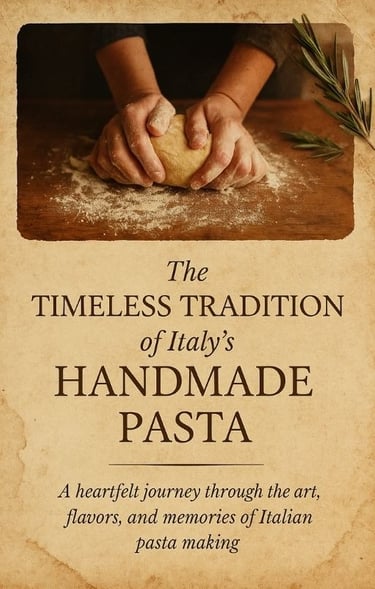
If you want to truly understand handmade pasta — not just follow instructions — this is exactly what I explain step by step in my book, The Timeless Tradition of Italy’s Handmade Pasta.
It’s not just about recipes, but about learning to recognize the dough with your hands, the way it’s done in Italy.