Why Italian Pasta Was Always Made by Hand
When hands knew more than recipes
KITCHEN BLOG POST
Milly Baker
1/6/20262 min read


The Art of Pasta Making
Flour was placed directly on a wooden board, eggs added slowly, and the dough was kneaded until it felt just right. Too dry? Add a little water. Too soft? Add more flour. Hands knew how to read the dough in a way no machine ever could.
Working pasta by hand helps develop gluten naturally, creating elasticity without overworking the dough. Letting the dough rest is just as important — it relaxes, making it easier to roll. These small steps, learned by touch, made every pasta sheet perfect.
Cultural and Historical Insight
Before pasta machines existed, hands were the only tool — but also the most reliable. Making pasta was a slow, familiar ritual, often shared at the kitchen table, where patience and care mattered more than speed. This tradition shaped Italian food culture for centuries.
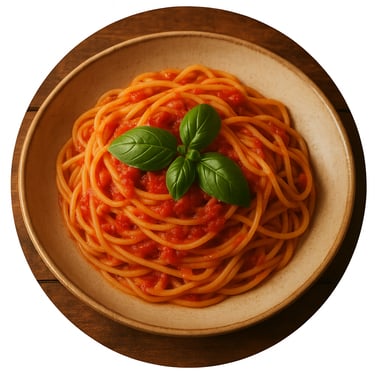
Families would often consume pasta as a primo piatto, accompanied by a hearty second course. Each meal was delicately paced, allowing diners space to savor their food and reflect together. In this bustling display, pasta was elevated beyond mere sustenance—it became an unspoken promise of connection that transcended time.
Tips for Making Egg Pasta at Home
Use the right proportion: for every 100 g of flour, use 1 egg. This gives a balanced dough that’s easy to roll and has the perfect texture.
Eggs at room temperature: always use eggs that are not straight from the fridge — this helps the dough mix evenly and improves elasticity.
Choose egg color wisely: if you can find golden-yellow eggs, the pasta will have a richer color and slightly deeper flavor.
Knead gently: add the eggs gradually to the flour, and knead by hand until the dough feels smooth and elastic.
Rest the dough: let it rest for at least 30 minutes, covered, to allow the gluten to relax before rolling.
Share the process: pasta making is always more joyful when done with family or friends — and it keeps the tradition alive.
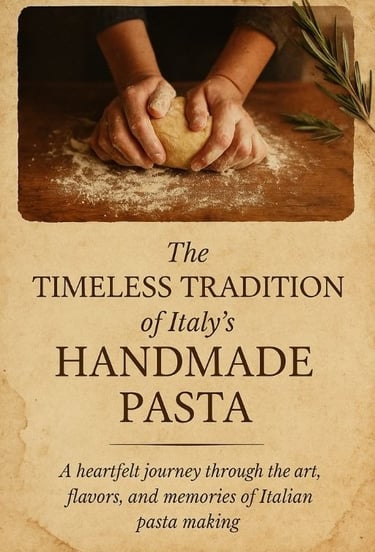
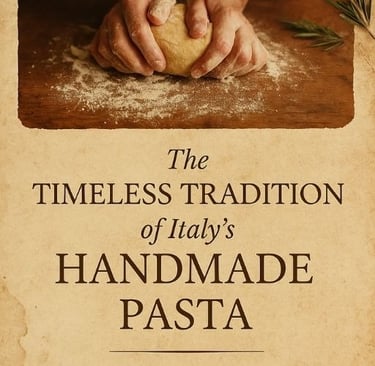
If you love discovering the stories behind traditional Italian pasta and want to bring these old techniques into your own kitchen, my vintage-style cookbook, The Timeless Tradition of Italy’s Handmade Pasta, is a small companion full of authentic recipes and tips. Each page captures the warmth of Italian kitchens and the joy of making pasta by hand — just as it has been done for generations.
It’s not just a cookbook — it’s a way to experience the gestures and flavors that make Italian pasta truly timeless.